'Sheol' 2025
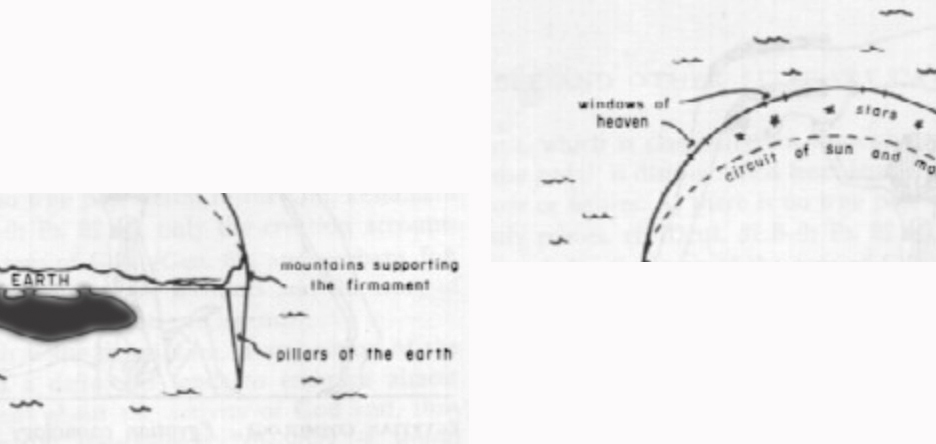
In ancient Hebraic cosmologies the underworld (sheol) holds centre stage as the common grave of all humanity. Unlike the hell of Christianity, it is a neutral space and has no relation to punishment. As the endpoint of both the righteous and the unrighteous, all beings are united into one collective entity. Metaphorically, however, sheol symbolizes a state of ruin or utter degradation.
A bit like the amorphous slime of mitochondria, sheol holds no properties beyond being the pit into which all beings end. And representations of sheol in the many images of the Hebraic cosmology are remarkably consistent in how they depict the form of this watery formlessness.
In Messianic Judaism, the end of time is literally the end of time – all things once past and return into an infinite timeless present. So sheol is also the contradictory endpoint from which all things re-emerge.
Bernice Donszelmann’s practice is multi-disciplinary, spanning site-specific installation, sculpture, drawing, video and participatory performance. Perceptions of the ground beneath our feet as both surface and depth as well as those instances when an uncertain division between land and water/solid and fluid manifests itself are central concerns. In turn, space is approached in narrative terms: the audience’s movement and orientation in space is integral in the experience of the work.
Recent solo exhibitions and projects have included three tides passed at Coleman Projects, 2024, LEVEL at APT in 2022 and [these roarers] with Lucy Gunning and Helen Robertson at the Whitstable Biennale in 2018.